When we treat a pest problem across the Hills District, one of the first decisions is whether to use a repellent or a non-repellent product. Both have their place, but they behave very differently, and the wrong choice is why a lot of DIY jobs never really work. Here is the difference, in plain terms.
Most pest sprays you buy off the shelf are repellent style. When bugs hit a repellent, some die and the numbers can drop fast, so in the first week it can look like the job is done. The catch is that the pests you actually want gone, the termites, german cockroaches and ants, can sense the product and simply steer around the treated areas. You end up moving the problem, not fixing it.
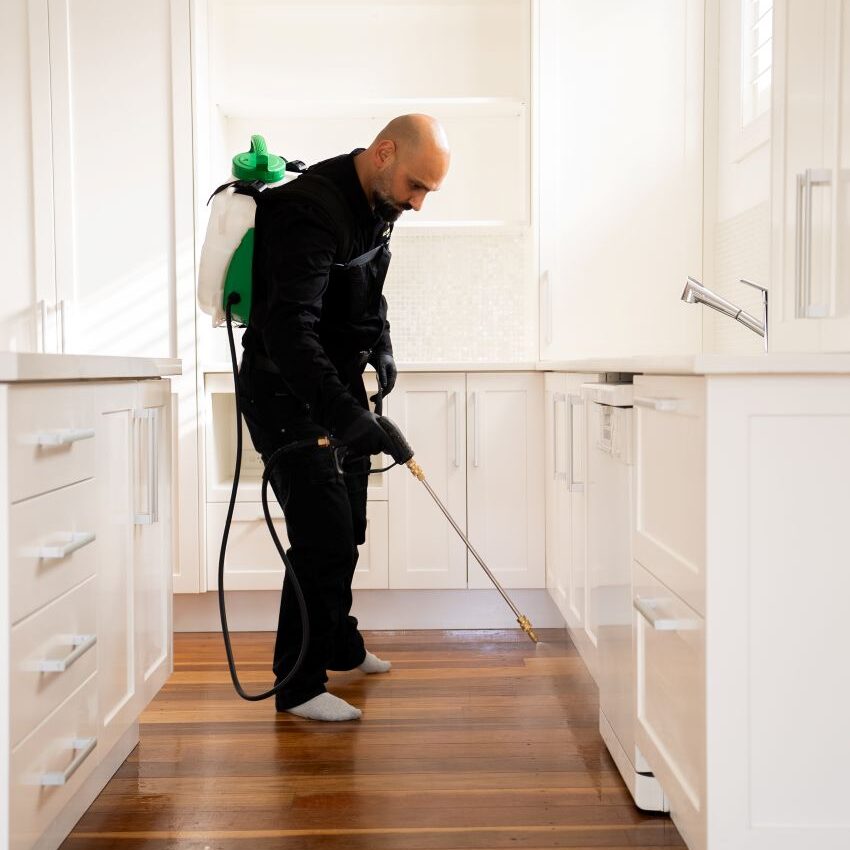
For termites and ants we reach for a non-repellent product like Termidor, because the goal is to reach the nest and the queen, not just the few insects out foraging. For german cockroaches we use non-repellent solutions for the same reason, to stop them breeding at the rate they do. Non-repellent treatments have become the standard tool for these jobs because the insects cannot detect them, so they walk straight through and carry the product back with them.
How Non-Repellent Treatments Work
A non-repellent product does not give off a smell or feel that insects avoid. Pests walk through the treated zone without knowing it is there, pick up the product, and carry it back to the nest. The effect is delayed on purpose, which gives them time to pass it on to the rest of the colony before it takes hold. That transfer is what makes it work on social insects like termites and ants, where killing a handful out the front does nothing to the nest.
Why We Use Them
- It reaches the colony. Because the insects cannot detect it, they carry it back to the nest, which is how you get to the queen and the rest of the colony.
- It lasts. Most non-repellent products keep protecting for months, which cuts the chance of the problem coming straight back.
- It targets the pest. Used properly, these products focus on the pest you are after with less impact on everything else.
- It works in different spots. We can apply non-repellents inside and out, which suits most general pest jobs.
What’s In Them
A few active ingredients turn up again and again in non-repellent products:
- Fipronil. Works on a wide range of insects by disrupting the nervous system, and holds its residual effect for a long time. It is the active in Termidor.
- Imidacloprid. A neonicotinoid that interferes with the way insects pass nerve signals.
- Chlorfenapyr. Disrupts energy production inside the insect’s cells, and works across several pest types.
Termidor for Termite Work
Termidor is the non-repellent we rely on for termite treatments. It uses Fipronil, and it comes in a couple of formulations we choose between depending on the job.
- Termidor SC. A suspension concentrate mixed into a liquid termiticide for soil treatment.
- Termidor HE. A higher-efficiency formulation that spreads further through the soil for faster, more even coverage.
One thing worth clearing up: termite work is not a spray. It is a liquid termiticide applied into the soil around and under the building, so termites moving through the ground pass through it and carry it back to the nest.
How We Apply It
We put Termidor down as part of your termite barrier, and there is more than one way to do it. We can trench around the perimeter of the property and treat the soil directly, or drill through concrete and pump the termiticide into the soil underneath. The other option is a termite reticulation system, which is pipework installed under and around the home so the barrier can be topped up over time.
All three work. Which one suits your place comes down to the build, the access, and what is already in the ground. That is a conversation we have on site.
Frequently Asked Questions
What’s the difference between repellent and non-repellent pest control?
A repellent product drives pests away from treated areas, which sounds good but often just scatters them. A non-repellent product cannot be detected, so pests walk through it and carry it back to the nest. For termites, ants and german cockroaches, non-repellent is the one that actually clears the colony.
Why don’t DIY termite sprays work?
Most shop-bought sprays are repellent, so termites sense them and route around the treated spot instead of walking through it. You might knock over a few, but the nest keeps going. Proper termite control is a liquid termiticide applied to the soil by a licensed technician, not a spray from a can.
Is Termidor safe to use around my home?
Yes, when it is applied by a licensed technician to the right spec. Termidor goes into the soil around and under the building, not through your living areas, and it is non-repellent so it stays where we put it. We handle the mixing, placement and record-keeping as part of the job.
How long does a Termidor termite barrier last?
A properly installed soil barrier keeps working for years, and a reticulation system can be topped up to extend it further. The exact life depends on soil conditions, the formulation used, and whether the barrier stays undisturbed. We will give you a realistic timeframe for your property and a plan for periodic checks.
Getting the product and the application right is what makes the difference between a treatment that holds and one that fails. Get in touch with So Pest Off and we will walk you through the options that suit your home and your budget.


Pest Control Services
Get A Free Quote
Contact us today for a free, no-obligation quote on your pest control needs.