What Termite Treatment Involves for a Sydney Home
Termite treatment is the work we do once termites have been found in or around your home. It removes the active colony, protects the timber in your house from further damage, and puts protection in place so termites are far less likely to come back.
If you have seen mud tubes, hollow timber or discarded wings, call us on 0410 244 244 and tell us what you have noticed and where.
Termite treatment is not a single spray. It is a sequence of steps that confirms where termites are active, eliminates the colony that is feeding on your home, and then protects the house over the long term.
In most homes the sequence looks like this:
- An inspection to confirm termite activity and find where the termites are getting in.
- Colony elimination, usually with a baiting system, so the colony stops feeding on your home.
- A treated zone in the soil around the house, or another termite management system, for ongoing protection.
- Annual inspections, so any new termite activity is caught early.
The right approach depends on your home, where the termites are active and how the house is built.
Signs Your Home Needs Termite Treatment
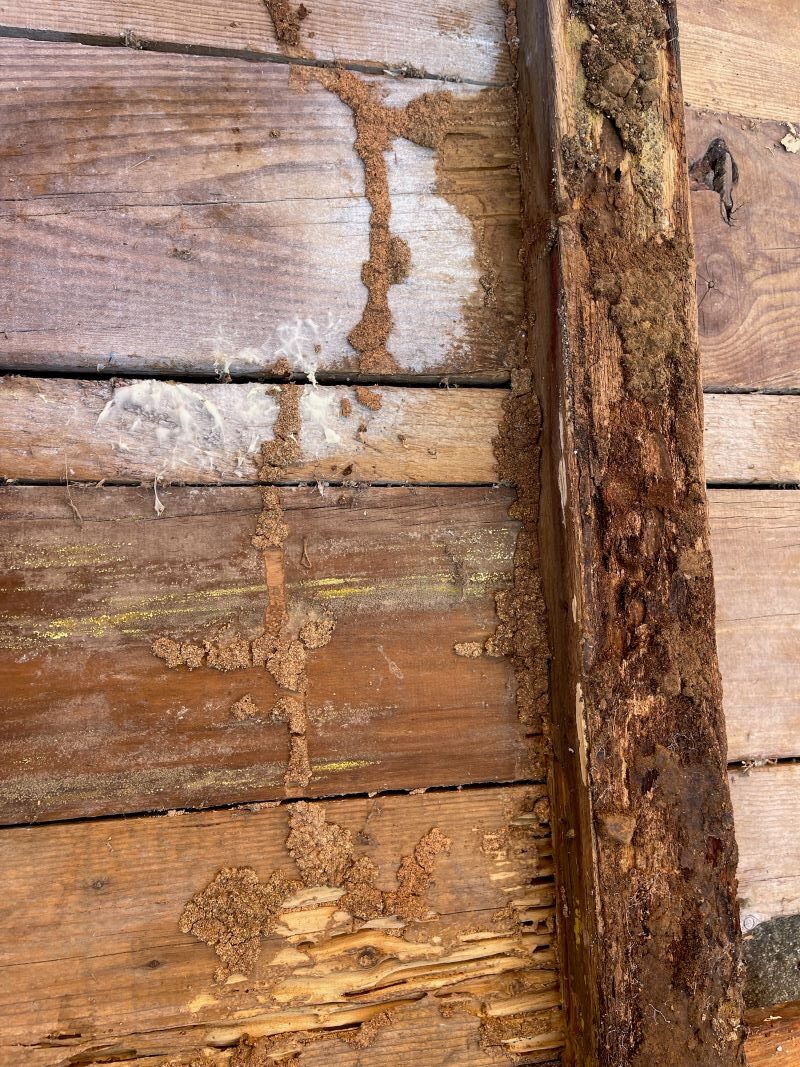
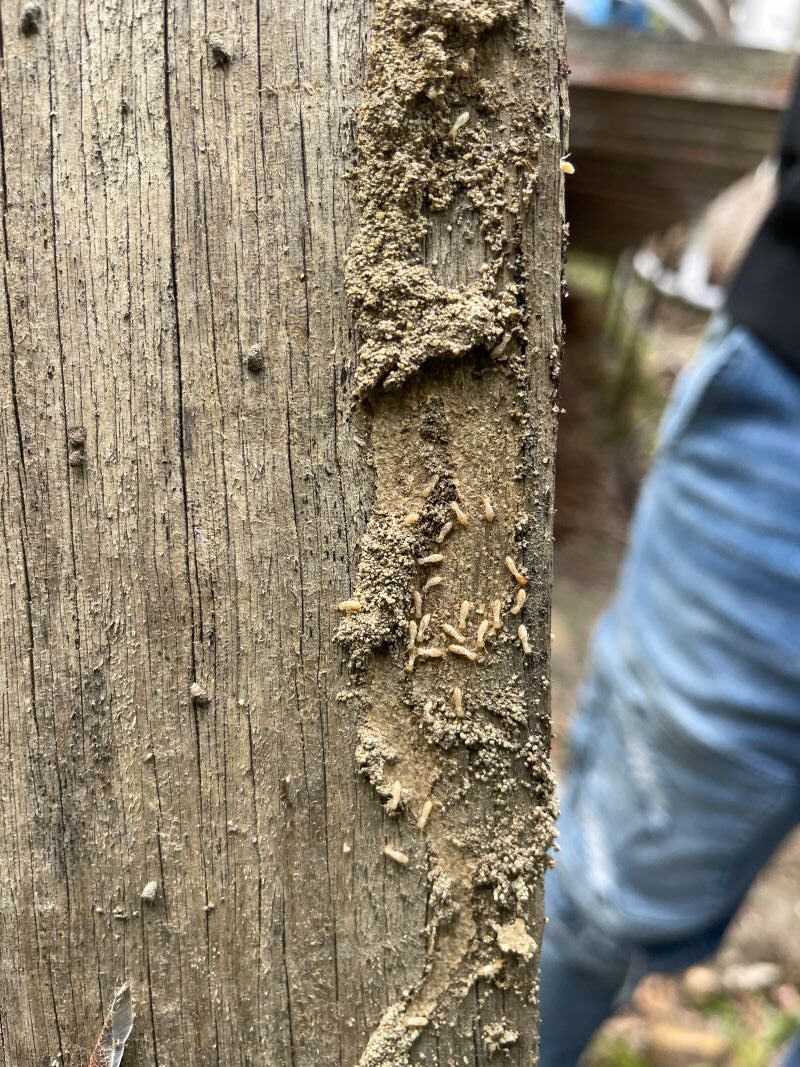
Termites often work quietly for months before anyone notices them, because they stay hidden inside walls, floors and the soil. Book an inspection if you see any of these signs:
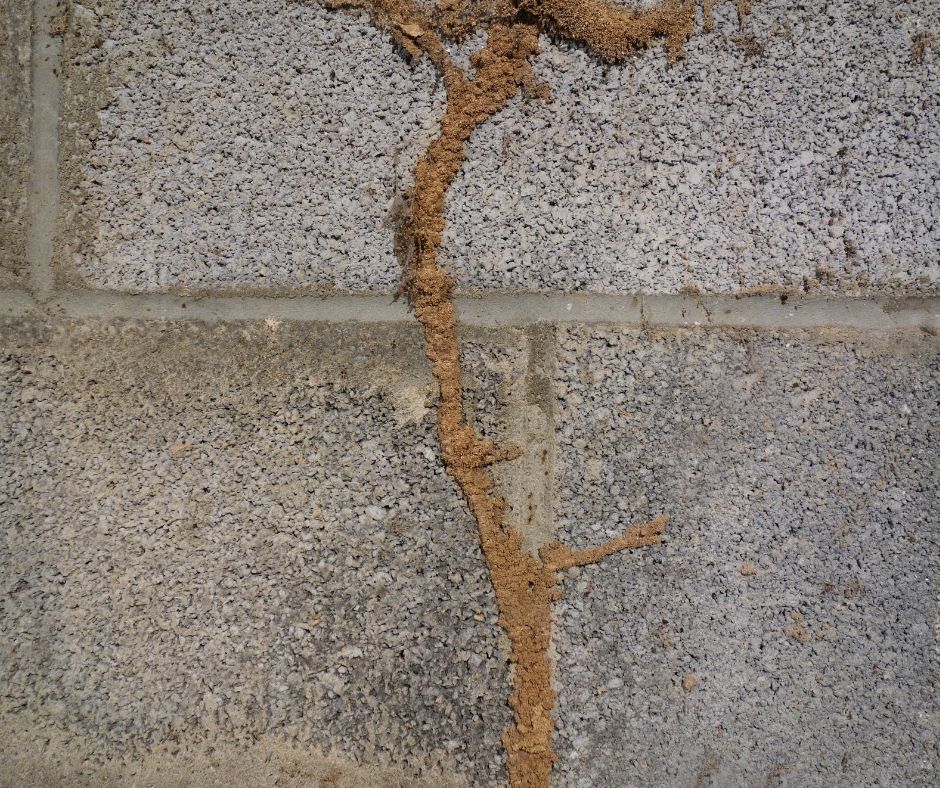
- Mud tubes: pencil-width mud tunnels on walls, piers or foundations.
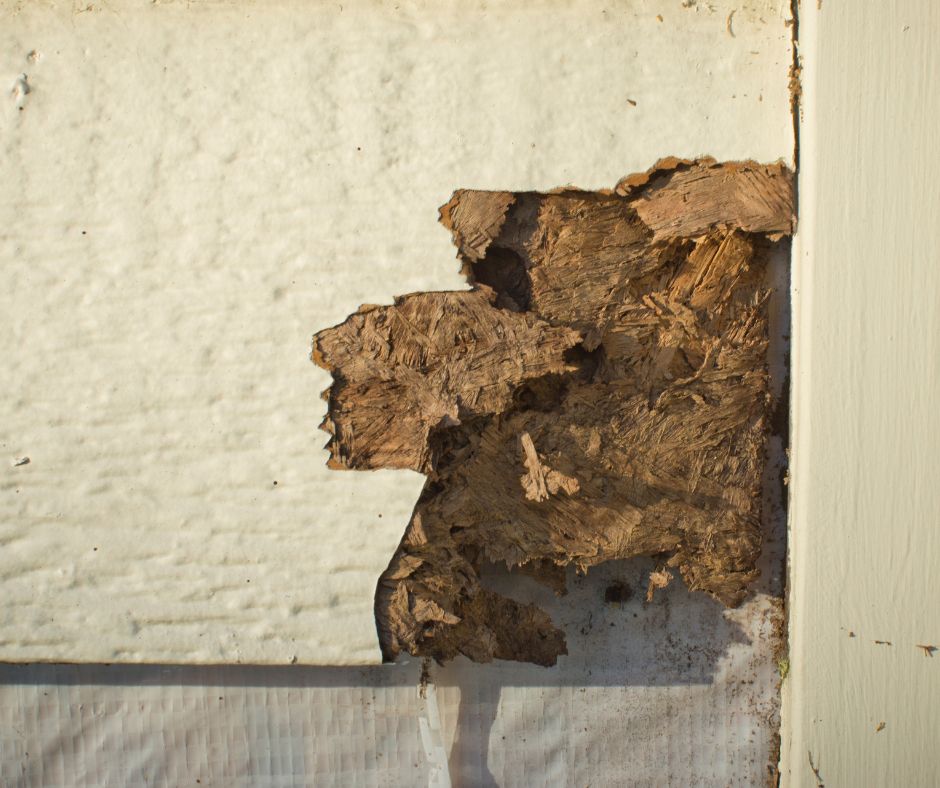
- Hollow timber: skirting boards, door frames or floorboards that sound hollow when you tap them.
- Discarded wings: small piles of wings near windows or light fittings after a swarm.
- Tight-fitting doors: doors and windows that suddenly stick, caused by moisture from termite activity.
- Bubbling paint or sagging floors: surfaces that blister or feel spongy underfoot.
If you find any of these, leave the area alone. Poking, breaking or spraying an active termite lead can make the termites move somewhere else, which makes them harder to find and harder to treat.
Call us and let a technician inspect the area first.
If you have seen flying termites inside the house, our guide on what to do when you see flying termites explains what they mean for your home.
Why Termite Treatment Starts With an Inspection
We need to know where termites are active before we can treat them properly.
The inspection shows us which parts of the house are affected, where the termites are coming from, and whether your home already has a termite management system that needs attention.
Our termite inspection page explains what the inspection covers and what the written report includes. If the inspection finds termites and you accept our treatment quote, the inspection fee is waived.
Termite Treatment Options We Use in Sydney
As an accredited Termidor provider, we use two main treatments for active termites: Trelona termite baiting and Termidor soil treatment. Many homes use both together.
Termite Baiting With Trelona to Eliminate the Colony
If we find an active colony, the aim is to eliminate the colony at its source rather than only treat the timber you can see.
Trelona ATBS is a termite bait system made by BASF. We install bait stations in the ground around your home, and BASF specifies a spacing of about 3 metres between stations, which is designed to intercept foraging termites. Worker termites find the stations and feed on the bait, and the active ingredient works through the colony until the whole colony is eliminated.
Baiting suits homes where a full chemical treatment is not practical straight away, and it lets us monitor termite activity over time. Every baiting system needs regular inspections under its label so the bait can be checked and replenished. For Trelona, the manufacturer allows those inspections at six-monthly intervals.
Termidor Soil Treatment Around Your Home
Termidor is a liquid termiticide applied into the soil around and under your home to create a treated zone. Termites cannot detect Termidor, so they move through the treated zone and carry the active ingredient back to the nest, where it spreads through the colony. BASF calls this the Termidor Transfer Effect.
BASF states that a Termidor treatment protects a home for up to eight years. We confirm the expected timeframe and any warranty details for your home in your quote.
If you would like to know why a non-repellent product like Termidor works differently from older repellent sprays, we explain it in our article on repellent and non-repellent termite treatments.
Using Termite Baiting and Termidor Together
Trelona ATBS is designed to be used together with Termidor. BASF states it is the only baiting system specifically approved for use with a Termidor treatment when a combined installation is needed. In practice, the bait stations work on the colony while the treated zone protects the house, which is why we often recommend the combination for homes with high termite pressure.