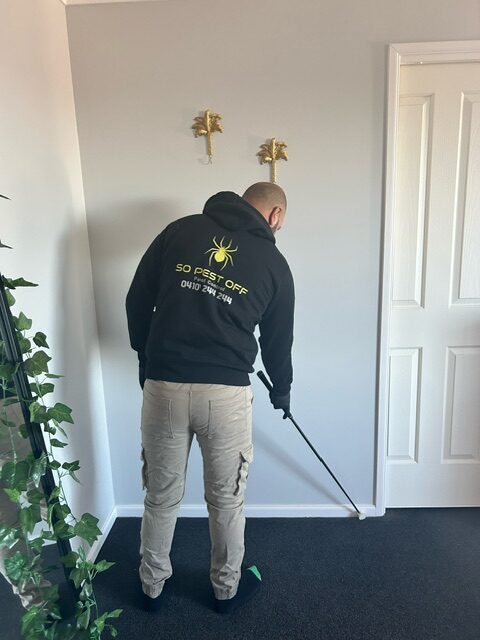
Buying a house in Sydney without a termite inspection is a gamble most buyers don’t realise they’re taking. Termite damage is often excluded from standard home insurance policies, and by the time it’s visible to an untrained eye, it can already be extensive. A pre-purchase termite inspection is the one check that tells you what’s actually happening inside the walls, roof void and subfloor before you sign anything binding.

Key Takeaways
What Does a Pre-Purchase Termite Inspection Actually Check?
Short answer: a licensed inspector checks the property for active termite activity, past damage and the conditions that invite termites in the first place, following the Australian Standard AS 4349.3-2010 for timber pest inspections.
That standard sets out what a proper inspection has to cover: subterranean and dampwood termites, borers of seasoned timber, and wood decay fungi (rot), reported as found on the date and time of the inspection. In practice, that means an inspector works through the roof void, subfloor (where accessible), skirting boards, architraves, window frames, external cladding, fence lines, retaining walls and garden beds close to the house. Moisture levels get checked too, because damp timber and poor drainage are two of the biggest invitations termites get.
A moisture meter and thermal imaging camera are standard tools for this kind of inspection. They pick up temperature and moisture differences behind plasterboard and timber that aren’t visible to the naked eye, which is often where early termite activity hides.
Why Should I Get This Done Before I Buy, Not After?
Short answer: a pre-purchase inspection is meant to happen before you exchange contracts, so the findings can still change your decision, your price, or your conditions of sale.
Once contracts are exchanged in NSW, your ability to walk away or renegotiate on the strength of a termite report gets a lot narrower. Getting the inspection done during the pre-purchase window, alongside your building inspection, means you’re making an offer with your eyes open. If the report finds active termites or old damage, you can factor that into your price, ask the vendor to treat it first, or decide the property isn’t worth the risk at all.
It’s also worth knowing that a termite inspection and a building inspection are not the same thing, even though they’re often booked together. A building inspector looks at structural condition broadly. A timber pest inspector is specifically trained to identify termite species, activity level and the extent of any damage, which needs a different skill set and different tools.
What Will the Report Actually Tell Me?
Short answer: the report tells you whether there’s evidence of termite activity or timber pest damage on the day of the inspection, and flags any conditions around the property that make future termite attack more likely.
A proper report under AS 4349.3-2010 will note visible damage, any live termite activity found, and risk factors like timber in contact with the ground, garden beds banked up against the house, leaking taps or downpipes, and subfloor ventilation that’s blocked or inadequate. It won’t tell you what’s happening inside a wall cavity that can’t be safely accessed, and it can’t promise the property will stay termite-free after settlement. What it gives you is an honest, standard-based snapshot, which is exactly what a buyer needs to make an informed decision.
If a property doesn’t have a termite barrier or management system in place, or the last treatment is unclear or undocumented, that’s the kind of thing a good report calls out clearly rather than glossing over. It’s also worth reading how do I know what termite protection my house has if you’re trying to understand what existing protection on a property actually means in practice.
Does the Time of Year Change Anything?
Short answer: termite activity in Sydney tends to pick up with warmer, more humid weather, but a pre-purchase inspection is worth doing whenever you’re buying, not just in termite season.
Termites don’t disappear in cooler months, they just tend to be less visibly active on the surface, which is exactly why a trained inspection matters more than a casual look around. The same logic applies to buying a property: the best time for a pre-purchase inspection is before you commit, regardless of season.
What Happens if Termites or Damage Are Found?
Short answer: a finding of termite activity or damage doesn’t automatically mean you should walk away, but it does mean you need clear information before you decide anything.
Depending on what’s found, options usually include negotiating on price to cover treatment and repairs, asking the vendor to arrange treatment before settlement, or getting a more detailed assessment of the extent of any structural damage. Every property and every finding is different, which is why the report itself, not a verbal summary, is what you and your conveyancer or solicitor should be working from.
Frequently Asked Questions
How long does a pre-purchase termite inspection take?
It depends on the size of the property and how accessible the roof void and subfloor are. A straightforward single-storey home is generally quicker to inspect than a larger property or one with limited access points, where the inspector needs more time to check thoroughly.
Can I get a termite inspection and a building inspection at the same time?
Yes, they’re often booked together as a combined pre-purchase inspection package. They cover different things though: a building inspector assesses structural and general condition, while a timber pest inspector specifically looks for termite activity, damage and risk conditions under AS 4349.3-2010.
Does a clear termite report mean the property will never get termites?
No. A clear report means no evidence of termite activity or damage was found on the day of the inspection, under the conditions accessible at the time. It’s a snapshot, not a guarantee, which is why ongoing protection and regular checks matter after you move in.
What if the property already has a termite barrier?
If a barrier or management system is in place, ask for documentation on when it was installed and by whom, and whether it’s still within its effective service life. Chemical and physical barrier systems work differently and have different inspection and maintenance needs, which a licensed inspector can explain for the specific property.
Is a termite inspection legally required to buy a house in Sydney?
It’s not a legal requirement in NSW, but it’s commonly treated as standard due diligence, particularly for older weatherboard or brick veneer homes where timber pest history is harder to see from a standard walkthrough.
Who should I call if I’ve already exchanged contracts and I’m worried about termites?
If contracts are already exchanged, get a licensed timber pest inspection done as soon as possible so you know exactly what you’re dealing with before settlement. So Pest Off is licensed under the NSW EPA (Pesticide Licence 5103392 and 5201158) and services the Hills District, Northern Beaches and Greater Sydney.
Booking a Pre-Purchase Termite Inspection
A pre-purchase termite inspection is one of the few checks that can genuinely change how you approach an offer. So Pest Off is a licensed, locally based pest control provider offering termite treatment and inspections across the Hills District, Northern Beaches and Greater Sydney, and can be reached on 0410 244 244 (bookings: 0430 180 725) to arrange an inspection ahead of your purchase.
For general questions on termite inspections and treatment, see our termite FAQ.
Sources:
- Standards Australia, AS 4349.3-2010 Inspection of buildings, Part 3: Timber pest inspections, retrieved 2026-09-02.


Pest Control Services
Get A Free Quote
Contact us today for a free, no-obligation quote on your pest control needs.