You spray a cockroach in the kitchen, it dies, and a week later three more are running across the bench. Across Rouse Hill and the Hills District, why cockroaches keep coming back is the question we get asked most. The one you can see is a small share of the ones living behind your cupboards, and a supermarket spray never reaches those.
Here is what makes cockroaches so hard to kill, and what actually clears them out of a Sydney home.

What you need to know
- Cockroaches spend the day inside wall voids, cupboard hinges and appliance motors, so a surface spray only reaches the few out in the open.
- German cockroaches live indoors permanently and need gel baiting plus a follow-up visit, not a one-off spray.
- Purdue University researchers found German cockroach resistance climbing four or six fold in a single generation, and concluded that chemicals alone will not control them.
Why are cockroaches so hard to kill?
Three things beat a one-off cockroach treatment. They breed faster than a single treatment can keep up with, they spend daylight hours inside cracks and voids where a spray never lands, and they build resistance to the products sold in supermarkets. The Victorian Department of Health’s cockroach pest control guidance says the same thing: cockroaches hide in cracks and crevices during the day and feed at night, and infested areas need a thorough treatment of all cracks, crevices, voids and the surfaces cockroaches travel on.
Kill the ones you can see and the nest behind the kickboard has not been touched.
German cockroaches are the hardest cockroach to get rid of
German cockroaches are amber coloured and 12 to 15 millimetres long when fully grown, with two dark stripes running down the back. They live inside. The Victorian Department of Health’s guidance puts most infestations in kitchens: under sinks, in and under cupboards and drawers, and around electrical equipment such as the fridge. It also notes they generally spread as stowaways in cardboard boxes or crates of food and drink, which is how a brand new kitchen ends up with them not long after a delivery.
Adults often carry their egg sacs around with them, so the next generation travels with the female instead of sitting on a surface where a spray could reach it. American and Australian cockroaches are a different problem and usually clear up with general pest control. A German cockroach treatment is its own thing, and treating one like the other is why a kitchen can still be crawling a month later.
Cockroaches breed faster than one treatment can keep up with
By the time you are seeing cockroaches in daylight, the population has usually outgrown its hiding spot and pushed into the next one. That is usually when people call us. A treatment that kills the adults and leaves the egg sacs untouched buys a few quiet weeks, then the kitchen looks exactly the same as it did before.
This is why the follow-up visit matters more than the strength of anything sprayed on day one.
Cockroaches build resistance to insecticides
This is the part most people have never been told. Researchers at Purdue University, in work published in the journal Scientific Reports in 2019, found German cockroach resistance increasing four or six fold in just one generation, even where the population had not been exposed to that class of insecticide. Study author Michael Scharf put it bluntly: cockroaches developing resistance to multiple classes of insecticides at once will make controlling these pests almost impossible with chemicals alone.
The answer the researchers landed on was not a stronger chemical. It was combining baits, traps, vacuuming and better sanitation with the chemical work. That is how we treat them too, and it is why we ask about the bins, the dog bowl and the dishwasher before we open a single product.
Where cockroaches hide in a Sydney kitchen
People expect us to head for the pantry. We rarely start there. The spots that matter are warm, dark, close to water and almost never wiped:
- The gap behind the kickboard under the cupboards
- Cupboard and drawer hinges, and the screw holes in the carcass
- The motor housing at the back and underneath the fridge
- The frame and door seal of the dishwasher
- The base of the kettle, the toaster and the microwave vents
- Under the sink, especially around a dripping tap or a damp cupboard floor
Every one of those is a crack, a void or a warm cavity. None of them get wet when someone sprays along a skirting board.

Why supermarket cockroach sprays make the problem worse
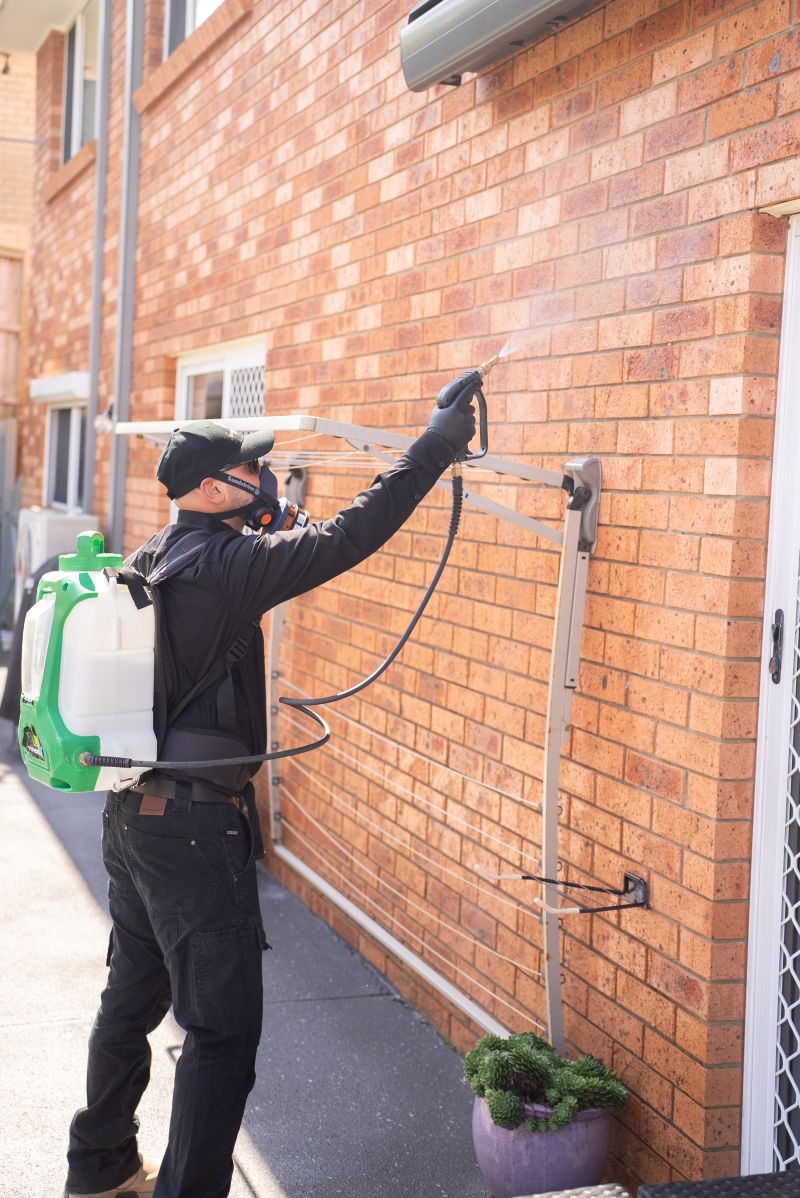
A repellent product does exactly what the name says. Cockroaches feel it and move away from it, which is the wrong outcome in a kitchen. One harbourage behind the dishwasher becomes three: one behind the oven, one in the wall cavity, one on the other side of the kitchen wall. If the spray you used sent them scattering rather than killing them where they live, that is how a cockroach problem spreads past the kitchen door.
The difference between products that repel and products that do not is worth understanding, and we have written about repellent and non-repellent insecticides in more detail.
What a German cockroach treatment involves
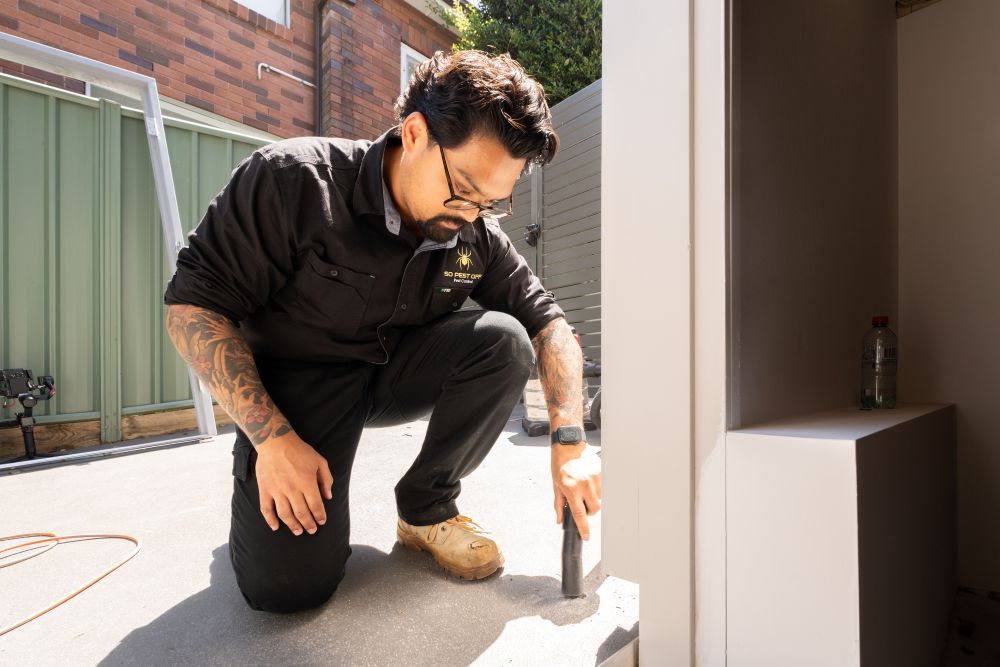
We start with an inspection of the kitchen and laundry to find where the cockroaches are actually harbouring, because that decides where everything goes. From there the work is gel bait placed into the cracks, crevices, hinges and voids they are living in, rather than a blanket spray across the benches and floor. Baits are becoming increasingly useful in cockroach control, and the Victorian Department of Health notes they can offer safety advantages where treatment is required in commercial food-handling areas, schools or hospitals.
Expect to see more cockroaches, not fewer, in the first few days. They come out to feed on the bait, and that is the treatment working. Please do not spray over the bait: a repellent product on top of it stops them feeding and you are back where you started. We come back to check the bait, re-treat where it has been taken and confirm the population is down.
What it costs depends on the size of the kitchen, how long the cockroaches have been there and whether it is a house, a unit or a commercial kitchen. We confirm the price with you when you book.
What you can do before your cockroach treatment
None of this is hard, and it makes a real difference to how fast the bait works:
- Empty the cupboard under the sink and clear the floor along the kickboard
- Wipe down benches, the cooktop and the inside of the microwave so the bait is the best meal in the room
- Get the dripping tap fixed, and dry the sink out at night
- Store food in sealed containers and lift the dog or cat bowl overnight
- Break down cardboard delivery boxes and get them out of the house
Are cockroaches a health risk in the home?
They are, and it is the reason we treat a kitchen infestation as urgent rather than cosmetic. The Better Health Channel lists salmonella, staphylococcus, streptococcus and the polio virus among the organisms cockroaches can spread, notes that ingested bacteria can survive in a cockroach’s digestive system for months and pass out in its droppings, and points to studies indicating cockroaches can also cause allergies. For heavy infestations it says to contact a qualified and licensed pest control operator.
Cockroach control in Rouse Hill and the Hills District
We are based in Rouse Hill, we are licensed with the NSW EPA, and cockroaches are one of the pest problems we are out on most weeks across the Hills District and the wider Sydney basin. If you are not sure which cockroach you have, send us a photo. We will tell you whether it is one for cockroach pest control or a German cockroach program, and what the treatment would involve.
Seen one on the bench? Contact us or call the team on 0410 244 244 and we will book the inspection.

Pest Control Services
Get A Free Quote
Contact us today for a free, no-obligation quote on your pest control needs.