The most common signs of termites in a house are mud tubes on walls or piers, timber that sounds hollow when you tap it, doors and windows that suddenly stick, bubbling paint, discarded wings, and clicking or rustling sounds inside the walls.
Most of them are easy to miss. Termites eat timber from the inside out, so a skirting board or door frame can look perfect while the inside is being eaten. Here’s what to look and listen for.
Key Takeaways
- The main signs: look for mud tubes, hollow or soft timber, sticking doors and windows, bubbling paint, tiny holes, shed wings or live termites, and listen for clicking or rustling in the walls.
- Hidden damage: termites eat timber from the inside out, so a skirting board or door frame can look perfect while it is hollow behind the paint.
- If you find a sign: leave it alone, take a photo and note where it was, because disturbed termites move somewhere else and become harder to find.
- Finding what you can’t see: our termite inspection uses a visual check, a donga tool that finds hollow timber, thermal and moisture imaging and Termatrac radar.
- How often: we suggest a termite inspection every year for a Sydney home.

What Are The Signs Of Termites In Your House?
Termites usually stay out of sight, so the signs are the things they leave behind. One sign on its own doesn’t prove you have termites. Doors stick in wet weather, and bubbling paint can be plain damp. But termites can do a lot of damage before anyone notices, and a regular termite inspection helps find activity early. If you find a sign, leave it alone and get it checked.
Also read: See Flying Termites: What They Really Mean
Eight Signs Of Termites To Look And Listen For
#1 Termite Mud Tubes On Walls, Piers And Stumps
Mud tubes are thin trails of dried mud, also called shelter tubes. Termites build them from soil, timber particles and saliva so they can travel between the nest and the timber they’re eating without being exposed to air and light.
Look for them running up external walls, foundations, brickwork, piers, stumps and fence posts, and across concrete paths. A lot of people take them for dirt splashed up by rain. Metal ant caps on top of subfloor stumps, when they’re installed properly, force termites to build a mud tube you can see over the cap, so the tops of the stumps are a good place to check. If you find a mud tube, don’t break it or wipe it off.
#2 Hearing Termites Clicking Or Rustling In The Walls
Termites can be noisy. You might hear a faint clicking or rustling inside a wall, a skirting board or a timber floor. When a colony is disturbed, the soldiers send an alarm through the timber to warn the workers.
If you think you’ve heard clicking or rustling in a wall, note where it was and leave the wall alone. You won’t always hear termites, which is why our termite inspection also uses audible testing with a donga tool, thermal and moisture imaging, and Termatrac radar to find activity behind the surface.
#3 Termites Leave Timber Hollow Or Soft
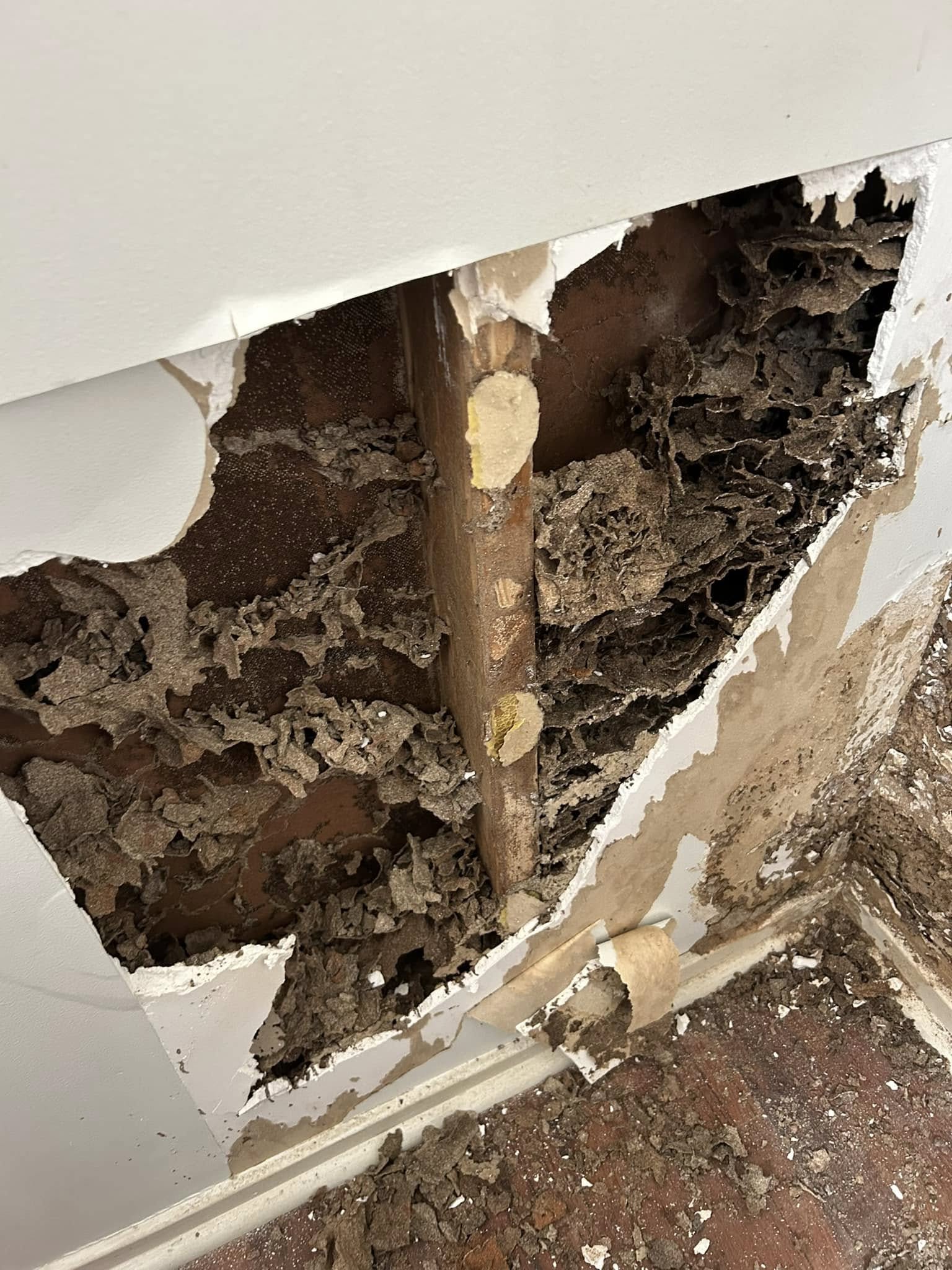
Skirting boards, door frames and floorboards that sound hollow when you tap them are a common termite sign. Timber that feels soft or looks damaged is another one to watch for.
#4 Termites Can Make Doors And Windows Stick
Doors and windows that suddenly become hard to open or close can be a sign of termites. Wet weather makes frames swell too, so it’s easy to blame the rain. Termites eat door frames and window sills from the inside out, and a frame can warp as it’s hollowed. If doors or windows have started sticking, especially in more than one spot around the house, get them checked.
#5 Bubbling Paint Can Be A Sign Of Termites
Paint that bubbles or peels and looks like water damage can also be a sign of termites. Termites need moisture as well as timber, and subterranean termites become a problem in houses with a constant water source, such as a leaking pipe or a leaking roof.
#6 Termite Holes In Ceilings Or Walls
Termites sometimes break through the plaster, gyprock or paint over the timber they’re eating. That leaves tiny holes, sometimes with fine, sandy debris around them. If holes appear in a ceiling or wall with no obvious cause, take them seriously, because they can mean termites have been active inside the structure for some time.
#7 Discarded Termite Wings Near Windows, Doors Or Lights
Flying termites leave the nest in warm, humid weather to start new colonies, and the new pairs drop their wings once they land. Shed wings are a good sign that termites are around.
A swarm near your home doesn’t always mean the house itself has termites, because they can fly in from nests in the garden, a neighbour’s yard or nearby trees. It’s still a good reason to book an inspection and find out where the colony is.
#8 Seeing Termites In Timber Or Mud Tubes
Sometimes you see the termites themselves, in timber, walls, furniture or a broken mud tube. Termites have pale brown to white bodies with a darker head, bead-like antennae and no narrow waist in the middle of the body, which is one way to tell them from ants. Soldiers have darker, larger heads, and Coptotermes soldiers squirt out a white, rubbery, glue-like substance when they’re disturbed. If you find live termites, leave them where they are.
Also read: Why Winter Is the Best Time to Get a Termite Inspection
What Does Termite Damage Look Like?
Termite damage is often hidden behind a surface that looks normal. Because termites eat from the inside out, a wall that looks perfect can be hollow behind the paint.
Termite damage and wood rot can look alike. A timber pest inspection to the Australian Standard AS 4349.3 covers subterranean and dampwood termites, borers and wood decay fungi (rot), so the report tells you which one you’re dealing with. Our pre-purchase termite inspection page explains what that standard covers.
Where To Check For Signs Of Termites In A Sydney Home
Our termite protection guide describes much of Sydney, including the Hills District, the North Shore, Western Sydney and coastal suburbs, as a high-risk termite zone. These are the places to check:
- The roof void and roof timbers.
- The subfloor, especially around stumps and piers.
- Skirting boards, architraves, and door and window frames, especially around bathrooms, laundries and other wet areas.
- Timber fences, retaining walls and tree stumps.
- Garden beds and mulch next to the house, especially where they sit against the slab edge.
- Wooden furniture and stored timber.
Gum trees close to the house belong on the list too. Coptotermes termites nest in trees, especially eucalypts, as well as in stumps, under concrete floors and in wall cavities.
What To Do If You Find Signs Of Termites
Leave the area alone. Don’t spray it, don’t break the mud tubes and don’t seal the holes flying termites come out of. Disturbing an active termite lead can make the termites move somewhere else, which makes them harder to find and harder to treat.
Take a photo, note where you found the sign, and call us on 0410 244 244. Tell us what you’ve noticed and where, and we’ll arrange a termite inspection. If termites are found, our termite treatment page explains the options we use to remove the colony and protect the house.
How So Pest Off Finds Termites You Can’t See
Termites work inside timber, so a So Pest Off termite inspection uses four detection methods together:
- A visual assessment for signs of termite activity and damage.
- Audible testing with a donga tool, which checks timber for hollow spots.
- Thermal and moisture imaging. A thermal imaging camera picks up the temperature difference an active nest or a moisture pocket creates behind a surface, and a moisture meter confirms whether a wall is holding water it shouldn’t be.
- Termatrac radar, which picks up live termite movement behind plasterboard, timber, brick and masonry without drilling.
Termatrac is designed in Australia, and as well as radar it carries thermal, moisture and temperature sensors. When termites are known to be in the house, our technician uses Termatrac termite tracking to follow them through the walls and frame to where they’re getting in and where the nest is, so walls, skirting and floorboards don’t have to be pulled off to find them. It’s also used when live termites turn up during a renovation, to show how far the activity reaches inside the walls before any more of the house is opened up.
The radar picks up movement, so the house needs to be quiet and empty while the tracking is done. It can’t pick up old damage where the termites have moved on, which is why tracking follows a full inspection rather than replacing it.
You get a written report with photographs. It records what was inspected, what was found, any areas that couldn’t be reached and what we recommend. We suggest a termite inspection every year for a Sydney home, and more often if termites have been found before or the block has a lot of timber and moisture around it.
Bottom Line On Signs Of Termites
Mud tubes, clicking or rustling in the walls, hollow timber, sticking doors, bubbling paint, tiny holes, discarded wings and live termites are all reasons to book a termite inspection. Termites can do a lot of damage before anyone notices them, so leave the sign where it is and have it checked.
Call So Pest Off on 0410 244 244 or book a termite inspection. We work across the Hills District, the Northern Beaches and Greater Sydney.
Signs Of Termites FAQs
Can You Hear Termites In The Walls?
Sometimes. Termites can be noisy, and a soft clicking or rustling inside a wall or timber floor is a common sign. Not hearing anything doesn’t mean the house is clear, so listening is no substitute for a termite inspection.
What Do Termite Mud Tubes Look Like?
They’re thin trails of dried mud running up walls, foundations, piers, stumps or fence posts, made from soil, timber particles and termite saliva. Leave them where they are and book an inspection.
Do Termites Leave Droppings?
Some do. Small piles of pellet-like droppings, called frass, are often a sign of drywood termites. Drywood termites are found from Cooktown in far north Queensland and further north, so in Sydney the main concern is subterranean termites coming up from the soil.
How Do I Tell Termites From Ants?
Termites have no narrow waist in the middle of the body, bead-like antennae and pale brown to white bodies. They’re sometimes called white ants, but they belong to a different insect group from true ants.
How Often Should I Get A Termite Inspection In Sydney?
We suggest a termite inspection every year for a Sydney home. Book more often if termites have been found before, or if the block has a lot of timber and moisture around it.
So Pest Off is a family-owned pest control and termite business based in Sydney’s Hills District, licensed by the NSW EPA (Pesticide Licence 5103392 and 5201158) and accredited with Termidor, Trelona and Termatrac.
Pest Control Services
Get A Free Quote
Contact us today for a free, no-obligation quote on your pest control needs.